By Rose O. Sherman, EdD, RN, NEA-BC, FAAN
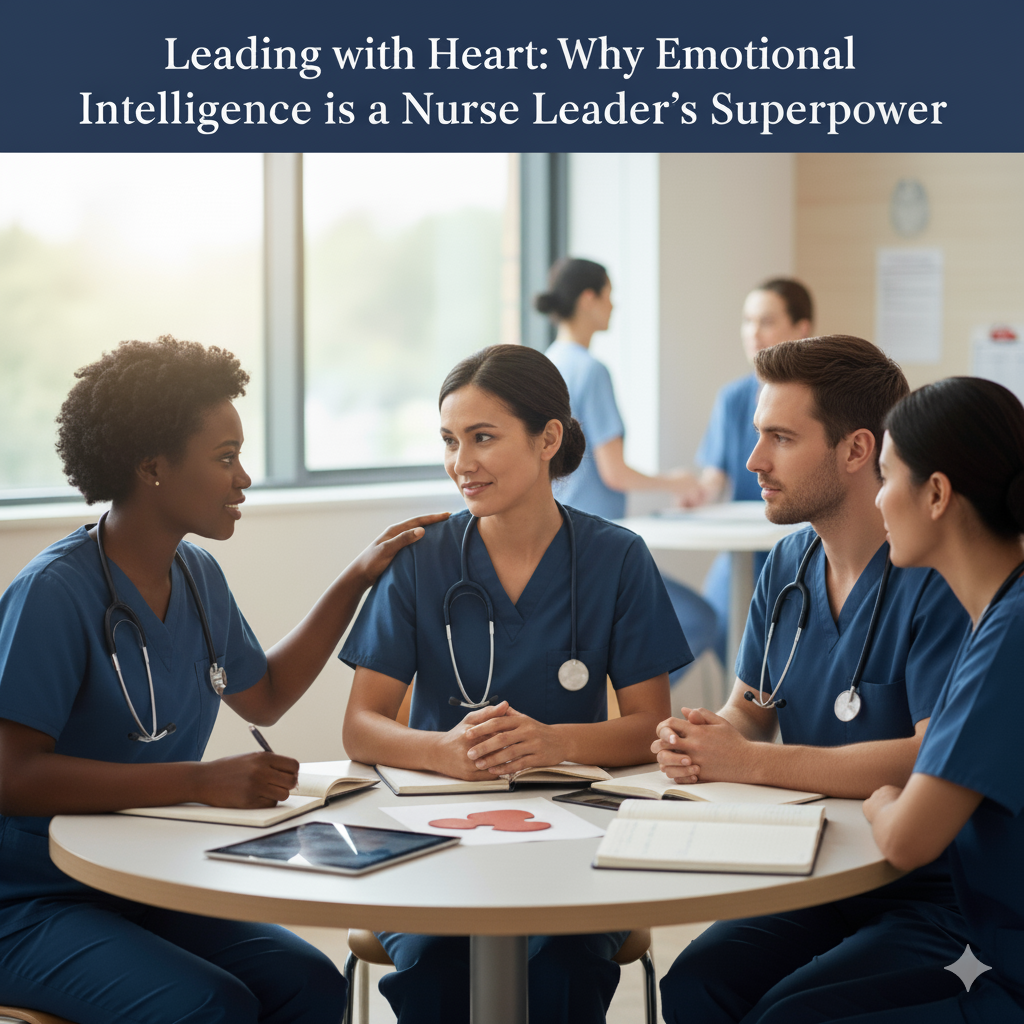
We often focus on business skills such as strategic planning and operational efficiency in leadership development, and don’t get me wrong, those are vital. But what truly elevates a good nurse leader to an exceptional one? It’s the ability to understand and manage emotions – both their own and those of their team. Nursing is inherently an emotional profession. We deal with life, death, joy, sorrow, fear, and frustration every single day. Our teams are often under immense pressure, navigating complex patient needs, staffing challenges, and the emotional toll of their work. In this environment, a leader who lacks emotional intelligence can unintentionally create more stress and disconnect, rather than alleviate it.
I was reminded of this recently with the following story: a new nursing director shared with me about an experience she had with one of her managers.
I am an experienced nurse leader, but new to the director role in my current organization. I sent an email to our team of nurse managers asking for more information about an overtime report submitted by each unit. I had been asked for this information by the Chief Nursing Officer. One of the managers, Kevin, responded with a snarky follow-up to my email, suggesting that the information I needed was already in the report. I was shocked at the email and wondered why Kevin had not picked up the phone to call me instead choosing to loop in all his colleagues.
Initially, I was angry and embarrassed about the tone of the email. The implication was that I didn’t know what I was doing and it questioned my leadership. It seemed pretty disrespectful but I did not know Kevin that well. Instead of lecturing Kevin or sharing the message with our CNO, I chose to assume good intentions in the situation. I called him and asked if he had a few minutes to talk. I went down to his office and we talked about it. I shared with him that I was surprised he chose to bring up his question using the approach he did via email. He admitted that he was feeling very overwhelmed and my request triggered a stress response that he was not proud of. I told him that I understood how this could happen and wanted us to have a good working relationship.
I congratulated this director for demonstrating a high degree of emotional intelligence in a difficult situation. What she did was not easy and also not the path that other leaders might take. Emotional intelligence in leadership is about self-awareness – understanding your own triggers, strengths, and weaknesses. It’s about self-regulation – managing your reactions, especially in high-stress situations, and not letting your emotions dictate your actions. It’s about empathy – truly understanding and sharing the feelings of your team members, even when you don’t agree with them. And finally, it’s about social skills – building rapport, communicating effectively, resolving conflict constructively, and inspiring others.
As she talked with Kevin, this director realized that he was clearly burnt out and struggling. A leader with lower EI might have seen Kevin’s response as a performance issue and perhaps would have been dismissive of his struggles. Instead as she talked with him, she recognized the signs of distress, listened to his concerns about his workload and validated his feelings. She then explored solutions to create a stronger working relationship with him and look for ways to help him manage his responsibilities and feel more supported. She demonstrated grace and turned what could have been a breakdown of a relationship into an opportunity for growth and stronger cohesion.
In today’s challenging healthcare landscape, where burnout is a constant threat, investing in emotional intelligence isn’t just a soft skill – it’s a strategic imperative. It leads to lower turnover, increased job satisfaction, improved communication, and ultimately, a more resilient and effective nursing team. So the next time you find yourself in a very challenging situation that triggers stress and anger, stop and ask yourself what would be the most emotionally intelligent thing you could do right now.
© emergingrnleader.com 2025
Our Most Popular Right Now The New World of Work Workshop
Two Brand New Workshops for Your Team in 2025
*** Trending – Building Bridges Not Walls: Leading Multigenerational Work Teams – Click Here for More Information Building Bridges Not Walls
Nurse and Nurse Leader Work-Life Balance and Well-Being: Nursing Leadership Strategies for Success – Click Here for More Information WorkLife Balance and Wellbeing WS
New Book – Click Here to Buy



 LinkedIn
 Instagram