“Health care in America has experienced an explosion in knowledge, innovation and capacity to manage previously fatal conditions. Yet, paradoxically, it falls short on such fundamentals as quality, outcomes, costs and equity.” IOM Report on Best Care at Lower Cost
By Rose O. Sherman, EdD, RN, FAAN
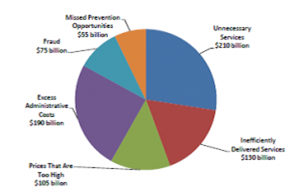 The business of caring has become both complex and expensive. In the United States, we currently spend more than $8000 for every man, woman and child on health care each year often without achieving the best outcomes. Left unchecked, these costs could rise to $13,000 by 2018. Not surprisingly, a big part of the health care reform discussion is centering around controlling costs. Both political parties have proposals that call for up to $750 billion in reductions to the Medicare budget. Ironically this week, the Institute of Medicine released a new report titled Best Care at Lower Cost that estimated that the current waste in the health care system totaled $750 billion in 2009 alone. Better care at a lower cost is possible, and could be achieved if we ran a health care system that was consistently reliable and focused on continuous quality improvement.
No Way to Run a Business
One interesting point made in the IOM report is that the shortcomings in the health care system become more visible when compared to other businesses. Builders as an example refer to blueprints usually drawn by architects to coordinate the work of carpenters, electricians and plumbers. Banks provide their customers with financial information real time. Automobile manufacturers produce thousands of vehicles that are standardized at the core but can be tailored at the margins. Authors of the report suggest that health care could learn from other industries how to better meet specific needs, expand choices yet shave costs.
Key Recommendations
The report provides the following 10 specific recommendations:
- Improve the capacity to capture clinical, care delivery and financial data for better care, system improvement and the generation of new knowledge.
- Streamline and revise research regulations to improve care, promote the capture of clinical data, and generate knowledge.
- Accelerate the integration of best clinical knowledge into care decisions.
- Involve patients and families in decisions regarding health and health care, tailored to fit their preferences.
- Promote community-clinical partnerships and services aimed at managing and improving health at the community level.
- Improve coordination and communication within and across the organization.
- Continuously improve health care operations to reduce waste, streamline care delivery, and focus on activities that improve patient health.
- Structure payments that reward continuous learning and improvement in the provision of best care at lower cost.
- Increase transparency on health system performance.
- Expand commitment to the goals of a continuously learning health care system.
Implications for Nurse Leaders
We are entering a new era in health care where reimbursement will shift from a volume-based system to a value-based system. This report suggests that leaders will need to build organizational cultures that value evidence-based practice, encourage continuous learning and promote transparency. This calls for a transformational style of nursing leadership and skilled decision making using the best data available. With all the discussion about evidence-based nursing practice, you might assume that evidence-based practice is widely in use and highly valued. A research article in this month’s Journal of Nursing Administration paints a different picture. Melynk, Gallagher-Ford, Fineout-Overholt & Kaplan found in their survey of 1015 RNs that many barriers remain in the implementation of EPB including resistance from colleagues, nurse leaders and managers. As the IOM report suggests better care at lower cost can be achieved but only if we are willing to accept the evidence and implement it into our practices.
Read to Lead
Institute of Medicine (September 2012). Best Care at Lower Cost. BestCareReportBrief Best Care at Lower Cost_Recs
Melynk, B.M., Gallagher-Ford, L., Fineout-Overholt, E. & Kaplan, L. (2012). The state of evidence-based practice in US nurses: Critical implications for nurse leaders and educators. 42(9), 410-417.
copyright 2012 Emerging RN Leader


 LinkedIn
 Instagram