By Rose O. Sherman, EdD, RN, NEA-BC, FAAN
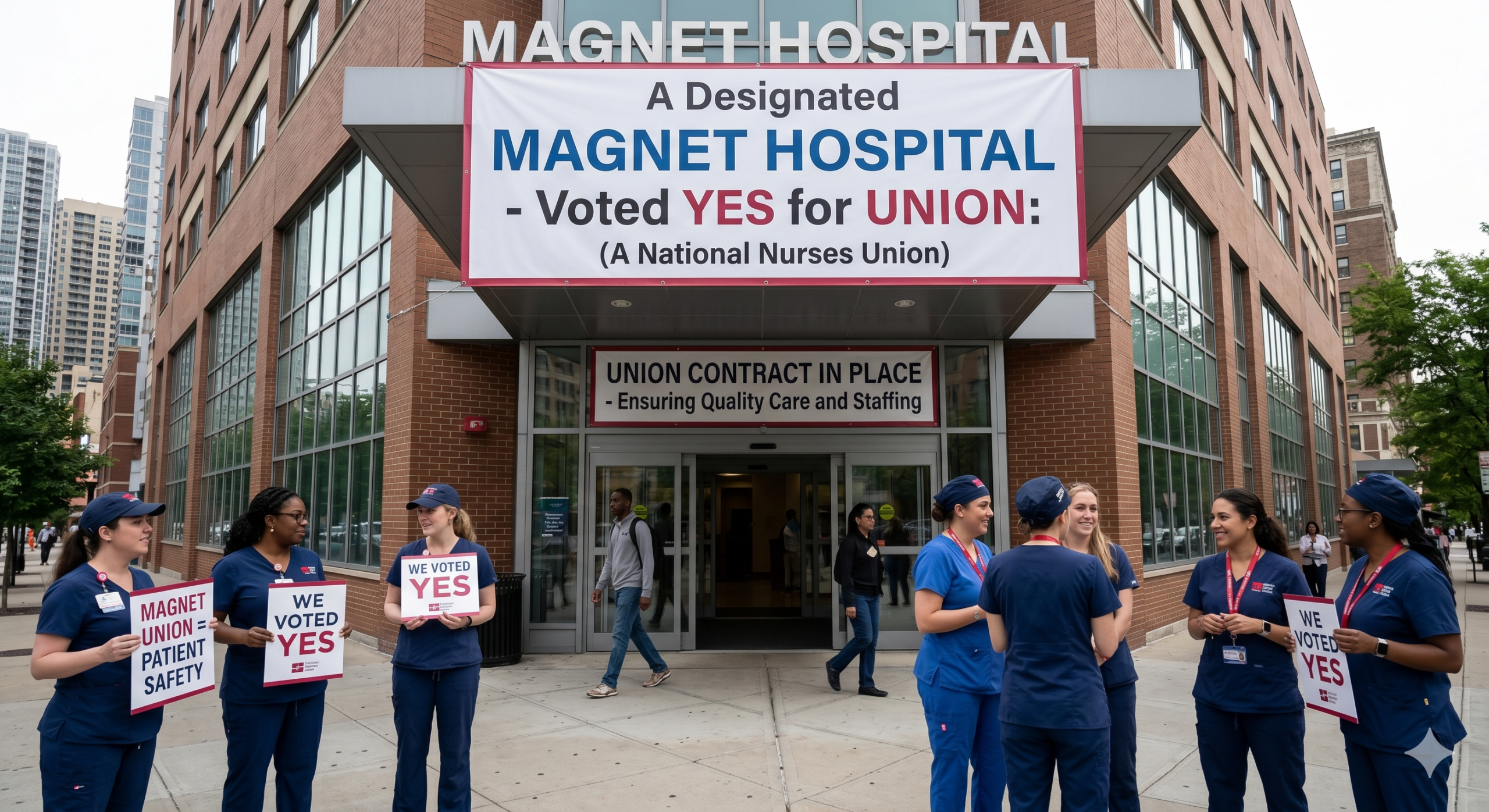
A colleague recently reached out to discuss some recent intense unionization efforts at her three-time Magnet-designated hospital. I know I am not alone in this, as I have observed in talking with other CNOs, but I never expected this to happen. I always felt that our Magnet status protected us from these efforts, and I have even argued that it was part of the ROI for Magnet, but something has changed. Our contemporary nursing workforce is viewing things very differently.
This CNO is far from alone in what she is observing, and she is right about questioning what looks like a paradox. The ANCC’s Magnet Recognition Program is considered the gold standard for nursing excellence, built on pillars like “Transformational Leadership” and “Structural Empowerment.” In theory, a Magnet hospital provides the exact environment where nurses shouldn’t need a union because they already have a powerful, structured voice.
Yet, we are increasingly seeing nurses at some high-profile, clinically excellent designated Magnet institutions organizing or threatening to strike. The sight of the prestigious Magnet banner hanging in the hospital lobby, while nurses outside the same building who helped their organization achieve Magnet are now holding union rally signs, is not something most nurse leaders ever expected to see.
I recently spoke with a staff nurse who helped in union organization efforts at her Magnet Hospital. She offered a different perspective. She suggested that a union drive at a Magnet hospital is often not a rejection of Magnet principles. In fact, it is the ultimate expression of them. Magnet culture deliberately cultivates highly autonomous, articulate advocates—and when systemic barriers block their ability to protect patients and themselves, they use those exact skills to organize. She observed that you no longer have a passive, compliant nursing workforce. You have highly educated, professional clinicians who believe their voice matters—and who expect the organization to treat them as true partners, not just cogs in a wheel.
She went on to observe that “Professional Governance is a form of soft power. Shared governance gives nurses a seat at the table for clinical practice, policy writing, and education. When the primary stressors on the floor are structural—such as inflexible staffing grids, non-competitive wages, pension cuts, or severe burnout—shared governance committees rarely have the authority to fix them. You need to move from soft to hard power. A collective bargaining agreement turns a collaborative “suggestion” into a legally binding contract.”
It is common for Chief Nursing Officers and managers to take a union drive as a personal failure or a sign of staff ingratitude. But what if we shift our perspective and see it instead as a structural distress signal? The context of the environment that we are in is playing a larger-than-life role in how nurses feel.
Few would deny today that our healthcare system is in dire need of a major structural overhaul. Patient volumes and acuity are skyrocketing. Access to care issues are rampant. Nurses in acute care environments report feeling burned out and exhausted. Nurse staffing methodologies were designed at a time when we had a more experienced nursing workforce rather than a novice-dense one. Nurse turnover and intent to leave are increasing. All of this is happening against a backdrop of declining reimbursement.
Some of the same nurses who helped you to achieve Magnet may now feel that they need a voice beyond professional governance structures. Two things can both be true in this situation – nurses can respect the forces of Magnet and be proud of their Magnet Designation, yet feel that more is needed and seek outside representation.
What is true is that many nurses vote for unions without understanding what that representation entails or the contract limitations that leaders may face in individualizing their approach to meet nurses’ needs. Nurse leaders should continue to educate staff about the nuances of union contracts – it is often a double-edged sword that nurses may not fully grasp. Generation Z nurses, a growing percentage of the nursing workforce, may find themselves bound to a contract that is most beneficial to those with seniority.
Magnet status and unionization do not have to be mutual enemies. The common, defensive reaction is to view a union drive as a rejection of Magnet principles, but that is misguided. They are two different mechanisms aimed at solving systemic problems. When nurses vote for a union, nurse leaders must focus on what matters most in this environment. Accept the decision and remember that the best leaders learn to be very pragmatic in their approach. Nurse leaders are and always will be the architects of their nursing cultures. You never abdicate advocacy for nurses to unions.
© emergingrnleader.com 2026
To effectively lead through these challenges and others, nurse leaders need new tools and strategies. Let me help you as I have helped hundreds of organizations over the past five years. Please contact me at roseosherman@outlook.com to book a workshop or keynote for your team. Not seeing what you want on this list? Feel free to reach out, and I am happy to design a custom program to meet your needs.
Brand New For 2026 and Already Receiving Rave Reviews – Staying Power Building a Culture of Retention in the New World of Work
Brand New for 2026 and Already Popular – The Inverted Pyramid: Leading Teams of Novice Nurses The Inverted Pyramid WS Information Sheet
Our Most Popular Right Now –The New World of Work Workshop
A Leader Favorite – Building Bridges Not Walls: Leading Multigenerational Work Teams – Click Here for More Information Building Bridges Not Walls
A Must-Read Book in 2026 – Click Here to Buy



 LinkedIn
 Instagram