By Rose O. Sherman, EdD, RN, NEA-BC, FAAN
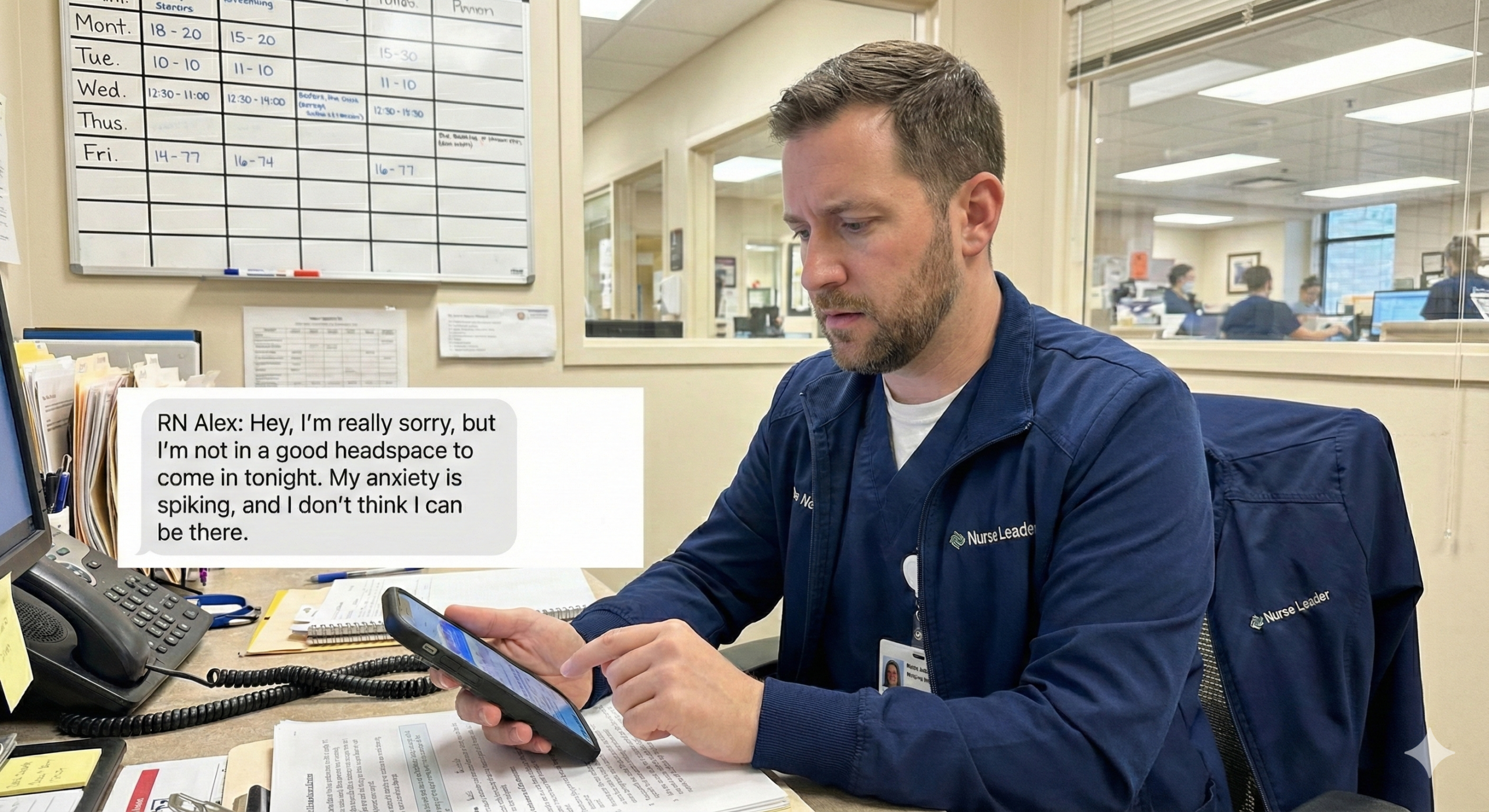
It is two hours before the shift begins, and one of your Generation Z nurses has just sent you a text that states the following: “Hey, I’m really sorry, but I’m not in a good headspace to come in tonight. My anxiety is spiking, and I don’t think I can be there.” This is a familiar dilemma for many nurse managers today. You want to reply by saying, “You know we are already short-staffed tonight. The team is really counting on you. Unless you are physically sick, I really need you to push through and come in. We can’t keep doing this.” But should you?
The guilt-and-grind approach focuses on the immediate operational crisis and uses guilt as a motivator. While this worked well with your Millennial staff, you have begun to notice it is not working with your Generation Z nurses. They might come in, but they will be disengaged, unsafe, and likely to be browsing job boards during their break. Or, they don’t reply and turn off their phone. Through their lens, you are sending a message that issues with mental illness are “less real” than physical illness. Gen Z is highly sensitive to situations that impact their mental health and is willing to call out toxic environments and leaders. Using the team’s suffering as leverage often creates resentment rather than loyalty.
Managing the Conversation in the Moment
The ideal response in this situation focuses on safety and support. The manager might reply by saying, “Thanks for being honest with me. I want you to be safe, and I don’t want you practicing if you aren’t 100%. I will figure out the staffing for tonight. Please take the evening to rest. I’ll send you an invite to chat for 15 mins on Thursday when you’re back so we can see how we can support you better.” When you respond this way, you have done three important things:
- You rewarded transparency. If you punish honesty, they will just lie next time (“I have food poisoning”).
- You framed the call-out as a patient safety decision, which is professional, rather than a personal failure.
- You aren’t giving a “free pass.” You are setting up a structured conversation to discuss trends, triggers, and reliability—but you are doing it after the crisis has passed.
What to do Next
The text message handles the moment, but the follow-up meeting handles the pattern. When you meet on Thursday, it will be important to manage the conversation in a way that supports the nurse but addresses the pattern of behavior. You may want to say the following:
- I noticed you’ve had a few shifts recently where you’ve felt overwhelmed before coming in. I value you on this team and I want you to stay.
- “What is specifically triggering that anxiety? Is it the patient acuity? The pre-shift report? Or is it something outside of work?”
- “If it’s work-related, let’s look at your schedule/assignment. If it’s personal, do you have the resources you need? I can refer you to EAP.”
Many new graduates have lower baseline mental health and are struggling with decompression between shifts. Use of unplanned leave is skyrocketing and trying to arrange staffing coverage today is very challenging. As leaders, we want to be constructive in how we coach through these situations. When you respect a Gen Z nurse’s boundary today, you gain their trust for the next year.
© emergingrnleader.com 2025
Our Most Popular Right Now The New World of Work Workshop
Building Bridges Not Walls: Leading Multigenerational Work Teams – Click Here for More Information Building Bridges Not Walls
Brand New For 2026 Staying Power Building a Culture of Retention in the New World of Work
New Book – Click Here to Buy



 LinkedIn
 Instagram