By Rose O. Sherman, EdD, RN, NEA-BC, FAAN
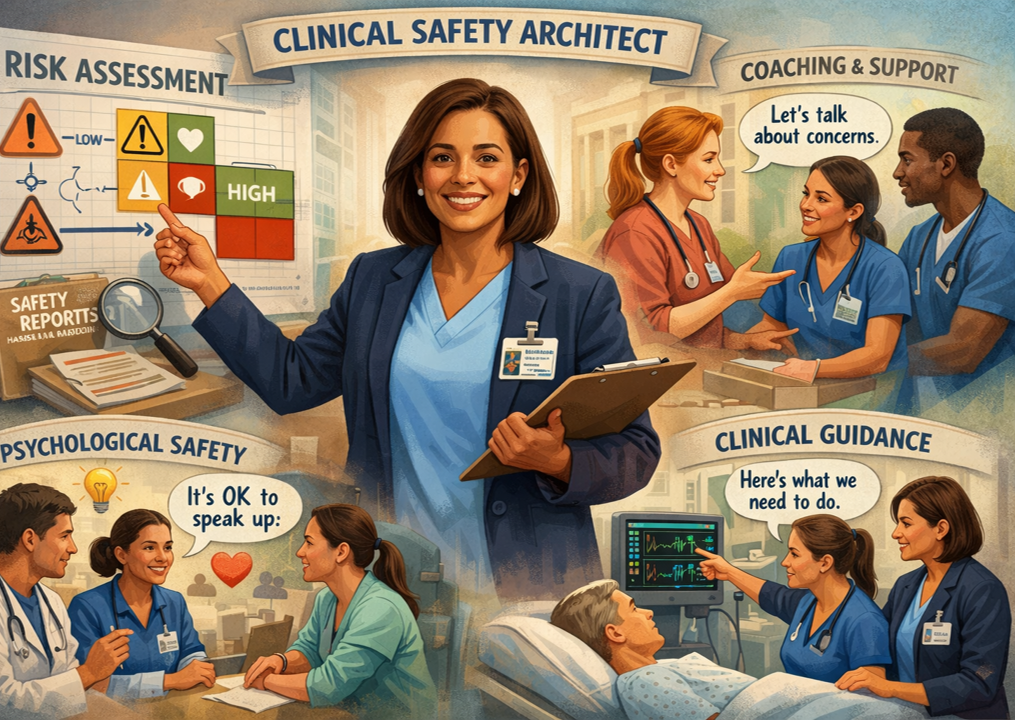
In today’s acute care environments, frontline clinical teams look dramatically different than they did a decade ago. The sharp decline in clinical tenures has reshaped unit demographics into an inverted structure: a heavy majority of novice nurses with under two years of experience supported by a narrow base of seasoned clinical preceptors and experts.
In an environment where historical “unit memory” and informal peer mentoring can no longer be relied upon to catch subtle patient declines, unit safety cannot be left to chance. Nurse managers must pivot from traditional administrative oversight to serving as Clinical Safety Architects who intentionally design systems, feedback loops, and cognitive guardrails that protect both patients and emerging staff.
Why Nurse Leaders’ Role Must Shift in Inverted Pyramid Environments
When unit expertise is inverted, traditional safety mechanisms fail. Novice nurses possess baseline clinical knowledge, but they lack the dynamic pattern recognition that comes with years of clinical exposure. They are prone to cognitive overload, rapid task saturation, and hesitation during critical escalations. When the foundational layer of expert nurses shrinks, the nurse manager cannot simply urge staff to “be more careful.” Instead, the manager must actively design structural systems that bridge this clinical wisdom gap.
Four Structural Architectural Strategies
To build an ecosystem that supports a novice-dense nursing workforce, nurse managers can integrate four architectural strategies into daily operations:
1. Shift to Cognitive Rounding
Traditional manager rounding often focuses on environmental compliance (e.g., call lights in reach, whiteboards updated). A Clinical Safety Architect conducts Cognitive Rounding to surface hidden clinical ambiguity. Institute daily “Safety Touchpoints” by spending 15 minutes per shift intentionally checking in on 2–3 novice nurses specifically to review their most complex patient.
-
Targeted Inquiries: Replace “How are your patients doing?” with “Which patient are you most concerned about right now, and what visual cues are driving that concern?”
-
Unpacking Decisional Logic: Ask novice nurses to walk through their prioritization for the next 2 hours, helping them build structured mental models to sequence care.
2. Implement Red Flag Menus.
Novice clinicians often hesitate to escalate deteriorating vital signs or subtle status changes due to fear of embarrassing themselves or interrupting a physician. Nurse managers should establish explicit, unit-specific Red Flag Menus that define non-negotiable escalation triggers (e.g., a specific change in work of breathing, persistent tachycardia despite fluid challenges, or intuition-based “gut feel” changes). Standardize the escalation pathway using structured frameworks (such as SBAR or Situation-Behavior-Impact) to remove emotional friction and clarify communication with medical teams.
3. Provide Structural Support for the Experienced Core of Expert Nurses
When veteran nurses are overwhelmed by constant precepting and informal consults, they experience rapid burnout, leading to further loss of unit wisdom. Protect expert nurses by adjusting patient acuity when they are actively mentoring or overseeing high-risk procedures. Where staffing permits, deploy seasoned staff into dedicated clinical resource roles rather than direct patient assignments during high-turnover shifts.
4. Conduct Psychological Safety and Near-Miss Debriefs
In a novice-dense culture, errors often stem from cognitive overload rather than negligence. If nurses fear punitive responses, critical early warnings go unreported. Normalize brief, 5-minute post-event huddles after high-acuity events or “near misses.” Focus debriefs on system gaps and situational clarity rather than individual blame: “Where did our communication break down?” and “What visual cue did we miss earlier in the shift?”
By shifting from reactive firefighting to intentional design, Nurse Managers, as Clinical Safety Architects, ensure that even amid shifting unit demographics, clinical excellence remains a structural constant, protecting both our patients and the next generation of nursing leaders.
© emergingrnleader.com 2026
To effectively lead through these challenges and others, nurse leaders need new tools and strategies. Let me help you as I have helped hundreds of organizations over the past five years. Please contact me at roseosherman@outlook.com to book a workshop or keynote for your team. Not seeing what you want on this list? Feel free to reach out, and I am happy to design a custom program to meet your needs.
Brand New For 2026 and Already Receiving Rave Reviews – Staying Power Building a Culture of Retention in the New World of Work
Brand New for 2026 and Already Popular – The Inverted Pyramid: Leading Teams of Novice Nurses The Inverted Pyramid WS Information Sheet
Our Most Popular Right Now –The New World of Work Workshop
A Leader Favorite – Building Bridges Not Walls: Leading Multigenerational Work Teams – Click Here for More Information Building Bridges Not Walls
A Must-Read Book in 2026 – Click Here to Buy



 LinkedIn
 Instagram