By Rose O. Sherman, EdD, RN, NEA-BC, FAAN
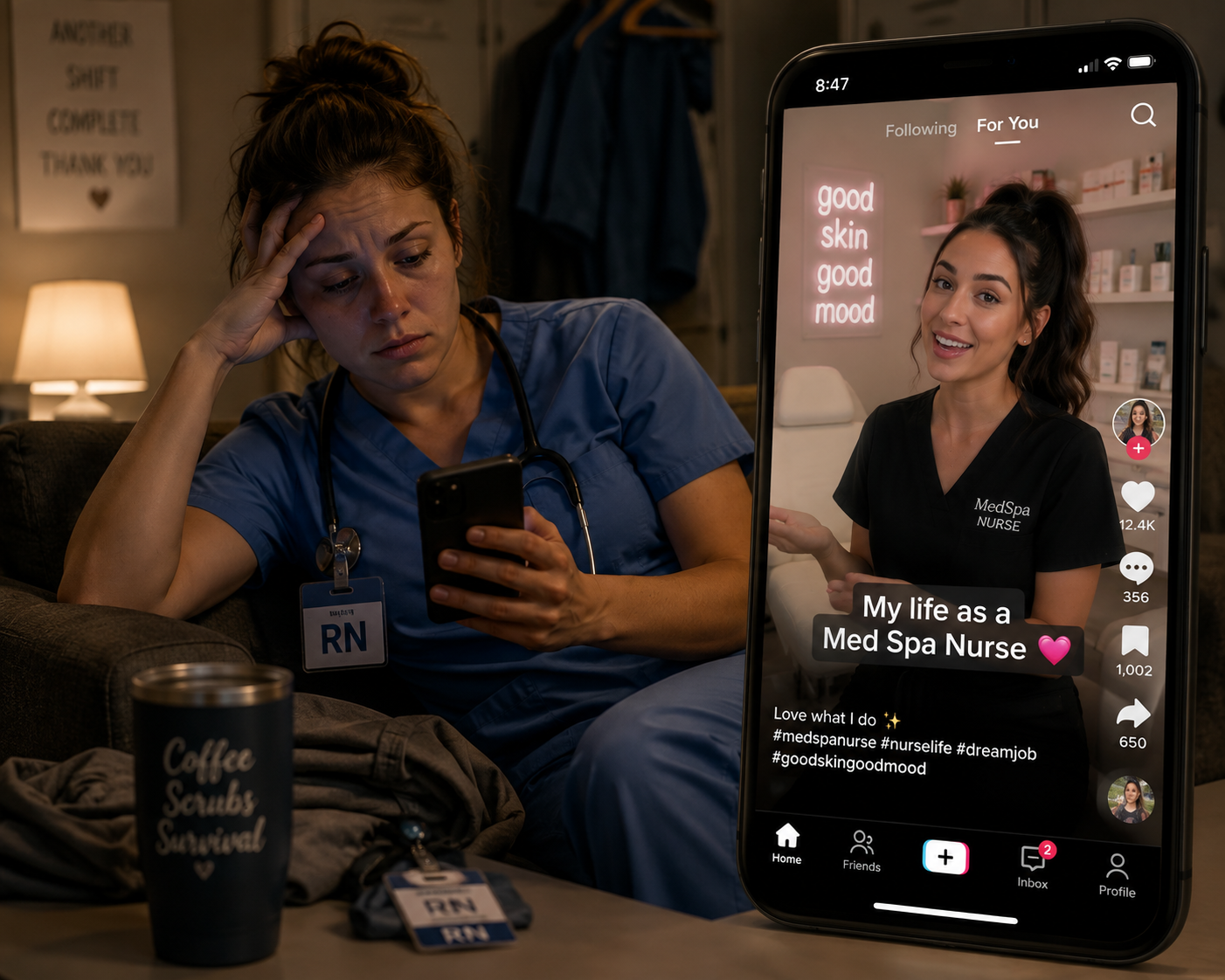
When I began my career many years ago, nurses like me learned what “normal” looked like from the hospitals we worked in and the nurses we worked with. Today, long before a nursing student wears their first pair of scrubs or sits for the NCLEX, their professional career advisor has already been working overtime. It doesn’t sit in an academic counseling office or wear a lab coat. It lives in their pocket, powered by an algorithm that curates hundreds of hours of short-form video content on TikTok, Instagram, and Reddit.
With one swipe of the screen, a 22-year-old nurse influencer poses in pristine, color-coordinated scrubs, breaking down how they leveraged a travel contract to work three days a week while traveling the world. On the very next swipe, an exhausted clinician sits in a hospital parking lot at 0730, speaking through tears about an unsafe 1:8 med-surg ratio, systemic failure, and moral injury. Today, every nurse carries around thousands of points of comparison in their pocket. Social media has dramatically expanded what nurses believe is possible. And that changes expectations.
The Mismatch Between Expectations and Reality
It is not surprising, therefore, that so many nurse managers talk with me about this mismatch between expectations and the everyday realities of nursing. This is the dual reality being served to the newest generation of clinicians. Social media is no longer just a place where nurses go to blow off steam after a hard shift—it has become the primary lens through which early-career nurses form their baseline expectations about salary, work-life boundaries, career velocity, and institutional trust.
For frontline managers, this dynamic is presenting unprecedented operational challenges. Traditional onboarding frameworks were built to address the classic “reality shock” of moving from textbook theory to clinical execution. But today’s new grads arrive pre-conditioned by an algorithmic feedback loop that often frames foundational bedside nursing as either a temporary 12-month stepping stone or an inherently toxic environment to be survived.
When 60-second videos promise rapid transitions into non-bedside “soft nursing,” instant travel-nurse pay, or immediate schedule autonomy, the day-to-day grit of acute care can feel less like a necessary foundation for clinical wisdom and more like a systemic trap. Social media is quietly rewriting the psychological contract between nurses and health systems. Nurse leaders must now learn how to ground those expectations in operational reality without dismissing the very real values driving this new workforce.
How Expectations are Shifting
Social media today functions as an amplifier of expectations. It doesn’t create every expectation, but it does accelerate them, make them more visible, and reinforce them as the norm. It spreads them faster than any hospital orientation ever could. Five key areas where we see the changes include the following:
1. Every Hospital Is Now Being Compared to Every Other Hospital – Where nurses used to compare themselves with coworkers, they now compare themselves to nurses working in thousands of hospitals across the country. They see videos about negotiating salary increases, self-scheduling, tuition benefits, career advancement, wellness initiatives, and sign-on bonuses. Even if those examples aren’t representative of what most employers are doing, they still influence perceptions. A nurse may think: Why don’t we do that here?
2. Social Media has Normalized Leaving Positions – Nurses increasingly are thinking not about staying with employers but instead asking: What is my next opportunity? Every day online, they see nurses moving into: informatics, flight nursing, legal consulting, aesthetics, education, pharmaceutical companies, medical device roles, and entrepreneurship. There is a relentless desire to keep up with others, but this often reduces organizational loyalty if nurses don’t see immediate growth where they are.
3. Nursing Leadership is Being Compared Publicly – Nurses regularly post stories about managers. The best leaders become role models. The worst leaders become cautionary tales. As stories get shared, expectations for nurse managers and about nurse manager availability have risen.
4. Social Media is Defining What a Healthy Work Environment Looks Like – Ten years ago, discussions about toxic workplaces, bullying, incivility, and gaslighting were rare. Today they are everywhere. That can be positive because it encourages organizations to address real issues, but there is a flip side. It can also create tension when difficult—but appropriate—performance conversations are interpreted as unsupportive. A leadership challenge today is helping nurses distinguish between psychological safety and the absence of accountability.
5. Work Is Increasingly Evaluated Through the Lens of Well-Being – This may be the biggest shift. Many nurses now evaluate a job by asking: Will this support my mental health? Can I maintain work-life balance? Will my manager respect boundaries? Can I take PTO? That’s a different mindset from earlier generations, who often prioritized stability and long-term tenure.



 LinkedIn
 Instagram