By Rose O. Sherman, EdD, RN, NEA-BC, FAAN
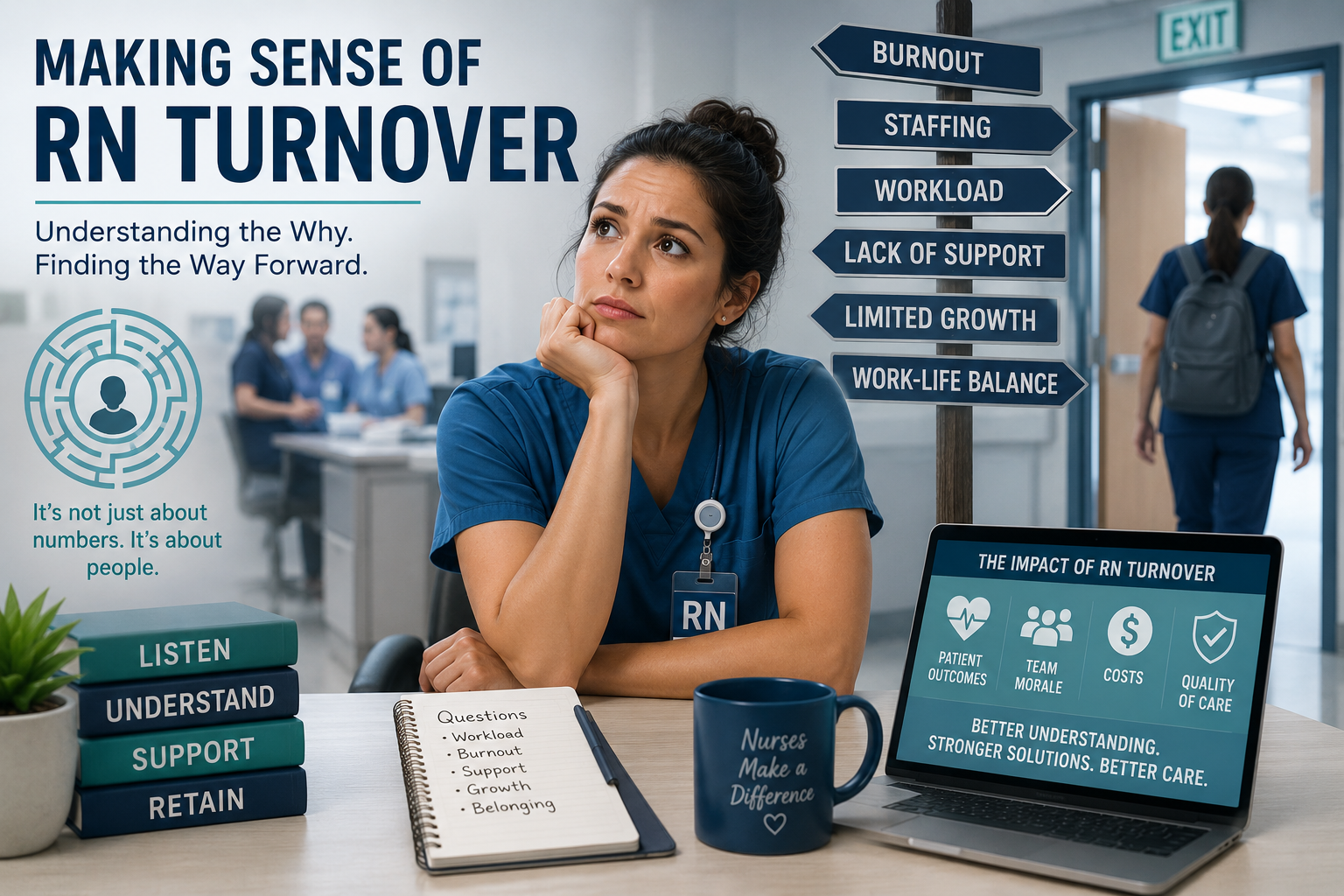
Nursing turnover is a complex issue for health systems that are spending considerable sums to improve their work environments. Two recently released studies (one published in Health Affairs using the 2022 Nursing Sample data and one published by Press Ganey using data from their NDNQI database) provide some additional insight into what we are seeing
As we navigate 2026, data from these studies indicate a meaningful shift from acute crisis to the early stages of recovery. However, this positive momentum is not evenly felt, and nurse retention remains a top-tier operational challenge. When looking at national benchmarks, enterprise-level averages can hide the real areas of vulnerability. Turnover clusters within specific cohorts, roles, and shifts:
Turnover is Highest in Early Career Nurses
Turnover is heavily concentrated among early-career nurses. Gen Z registered nurses experience a 22% turnover rate, closely followed by Millennials at 21%. Conversely, Gen X stands as the most stable cohort at 14%. While Baby Boomers also show a 22% departure rate, this is primarily driven by an exodus of retirements, which presents a separate risk: the rapid loss of institutional knowledge and clinical mentorship. A significant challenge for organizations is that nurse engagement experiences a sharp drop-off immediately following the initial professional socialization nurses receive in residency programs. A change in RN engagement in their organization starts to dip after the first six months, plummeting to their lowest levels between years 1 and 2 before recovering later in a nurse’s tenure (after year 5).
Night Shift is Most at Risk
Ironically, many new graduates begin their careers on the night shift because that is where the jobs are. Pockets of vulnerability are highly apparent when comparing day and night shifts. Night-shift nurses report significantly lower scores across multiple dimensions, with the starkest gaps appearing in safety culture prevention, reporting, and organizational pride.
The Actual Drivers of RN Turnover
Historically, much of the research on retention has relied on “turnover intentions” (what a nurse thinks) rather than actual behavior (what a nurse does). A massive multivariable regression analysis of frontline RN data from the National Nursing Sample highlights the heaviest modifiable weights behind actual, self-reported turnover. Not surprising job dissatisfaction is the single strongest predictor of turnover. Frontline nurses who are dissatisfied with their position are over 2.5 times more likely to actually leave. Frontline nurses experiencing chronic burnout also face significantly elevated odds of leaving their primary roles.
Interestingly, nurses enrolled in a degree program or those holding an advanced graduate degree (MSN/DNP/PhD) demonstrate substantially higher actual turnover. Rigid, unyielding work schedules often conflict with academic demands, and higher degrees make these nurses highly mobile and marketable for advanced practice or management positions outside the bedside. Many nurses today have second jobs to meet their economic needs. An analysis of the national nursing sample shows that frontline nurses balancing a secondary paid position in nursing are also far more likely to leave their primary role.
Turnover is rarely a sudden, random event; it is a predictable outcome of the structural environments we place our clinicians in. National unit-level analyses show that perceived staffing adequacy and frontline nurse manager support are the absolute bedrock of retention. When staffing is unreliable, nurses face constant cognitive reprioritization and workflow friction, making it impossible to feel successful. When an immediate supervisor’s span of control is excessive, their capacity to build relationships, provide coaching, and foster social integration collapses. Higher manager-to-FTE ratios are significantly associated with increased RN turnover and a rise in adverse patient outcomes, like fall rates.
Not Responding to A Satisfaction or Engagement Survey is a Risk Factor
We must pay attention to what nurses aren’t telling us. The data indicates that survey nonrespondents are twice as likely to leave an organization as those who respond (29% vs. 14%). Silence does not indicate neutrality; it signals deep disengagement and a total loss of trust.
Flexible and Nontraditional Scheduling is an Important Retention Lever
Because work-life balance and school obligations heavily drive actual turnover, deploying immediate policy changes—such as self-scheduling or non-traditional shift lengths—directly targets job dissatisfaction and curbs costly attrition.
Nurses in Unions are Less Likely to Leave
One of the most interesting data points in the national nursing sample study is the protective effect of representation. Participation in a labor union or collective bargaining unit is strongly associated with a lower statistically significant likelihood of turnover. The researchers speculated that these environments often reflect stronger protections, structured mechanisms to voice concerns to leadership, and clearer guardrails around working conditions.
High Impact Professional Governance Environments Help Retain Nurses
Engagement rapidly converts into authentic ownership when nurses and APPs possess clear, credible pathways to influence practice and work design. High-impact governance structures with clear decision authority and visible feedback loops foster the psychological safety needed to normalize professional voice and retain staff long-term.
These two studies help to provide insight into what has become an intractable problem in so many organizations. Retention programs need to employ multiple strategies which can change over time.
Read to Lead
Witkoski Stimpfel A, Padhye NS, Tran AK, Djukic M. Drivers of frontline registered nurse turnover: evidence from the 2022 National Sample Survey of Registered Nurses. Health Affairs Scholar. 2026;4(6):qxag140. doi:10.1093/haschl/qxag140 Health Affairs 2026 Nurse Turnover Based on National Nursing Sample 2022
Press Ganey Associates LLC. State of Nursing 2026. Press Ganey Associates LLC; 2026. Accessed June 28, 2026. State of Nursing 2026 _ Press Ganey
© emergingrnleader.com 2026
To effectively lead through these challenges and others, nurse leaders need new tools and strategies. Let me help you as I have helped hundreds of organizations over the past five years. Please contact me at roseosherman@outlook.com to book a workshop or keynote for your team. Not seeing what you want on this list? Feel free to reach out, and I am happy to design a custom program to meet your needs.
Brand New For 2026 and Already Receiving Rave Reviews – Staying Power Building a Culture of Retention in the New World of Work
Brand New for 2026 and Already Popular – The Inverted Pyramid: Leading Teams of Novice Nurses The Inverted Pyramid WS Information Sheet
Our Most Popular Right Now –The New World of Work Workshop
A Leader Favorite – Building Bridges Not Walls: Leading Multigenerational Work Teams – Click Here for More Information Building Bridges Not Walls
A Must-Read Book in 2026 – Click Here to Buy



 LinkedIn
 Instagram