By Rose O. Sherman, EdD, RN, NEA-BC, FAAN
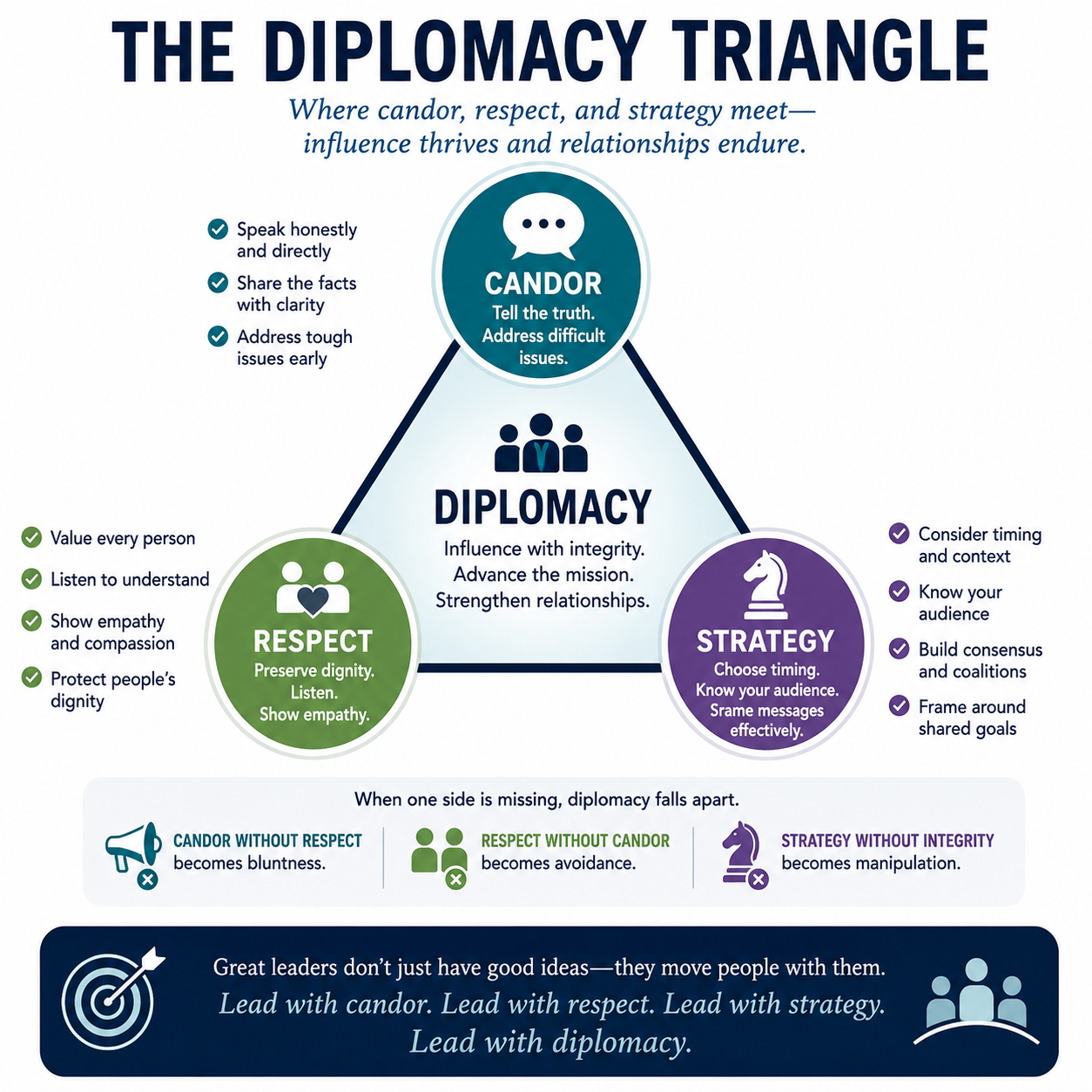
Dr. Jennifer Mensik Kennedy, the current ANA President, was interviewed for the August edition of the Journal of Nursing Administration. As part of the interview, she was asked which competencies are essential for emerging nurse leaders. Mensik-Kennedy notes in her insightful response: “We talk a lot about advocacy, and nurses are excellent advocates. But we are less skilled in diplomacy. Advocacy gets you to the table. Diplomacy keeps you there.”
I think she is spot on with the above observation – diplomacy is an underrated skill in nursing leadership but an important one if you are to maintain influence. One of the unintended consequences of today’s leadership environment is that we celebrate authenticity, courage, and decisiveness, but we don’t talk enough about how leaders influence without creating unnecessary resistance. Diplomacy is often misunderstood as “being nice” or “avoiding conflict.” In reality, it’s a strategic leadership competency.
What Diplomacy Is and Is Not
- Diplomacy is not a weakness – it is strategic influence. Many emerging leaders equate diplomacy with avoiding difficult conversations. Experienced executives know the opposite is true. Diplomacy isn’t about avoiding conflict. It’s about resolving conflict without creating unnecessary enemies. Diplomatic leaders address issues directly, choose their timing carefully, anticipate how the message will be received, and work to preserve others’ dignity.
- Diplomacy is understanding which political battles to fight and when to withdraw. Diplomatic leaders are keenly aware of the concept of political capital and of when to spend it and when not to. They ask themselves about the importance of issues and whether they are trying to win an argument or solve the problem.
- Diplomacy is not jumping too quickly into advocacy without having all the information. Many nurse leaders move too quickly into advocacy. Diplomatic leaders stay curious and ask many questions, such as “Help me understand how this recommendation was developed.” What assumptions are driving this decision? What concerns are you trying to solve? What constraints am I missing?
- Diplomacy is having a high level of situational awareness. Diplomatic leaders understand organizational politics, are sensitive to others’ stress levels, recognize the importance of timing, assess who has influence in situations and who feels threatened, and do not exclude key stakeholders from decision-making.
- Diplomacy is learning how to disagree without becoming disagreeable. Diplomatic leaders recognize that people can hold very different points of view on a topic. They can acknowledge different perspectives and seek common ground.
- Diplomacy is maintaining a high level of EI or emotional regulation. Diplomatic leaders understand that calm leaders gain credibility while reactive leaders lose influence.
- Diplomacy is building relationships before you need them. Diplomatic leaders are constantly cultivating allies, learning stakeholder priorities, and helping others to succeed. Then, when difficult issues arise, people are more willing to listen.
- Diplomacy is framing issues around shared goals. Diplomatic leaders will rarely argue from personal opinion; instead, they frame their ideas around a common purpose such as patient safety, quality outcomes, staff retention, and organizational strategy.
- Diplomacy is knowing when not to talk. Diplomatic leaders understand when to weigh in with their opinions and when to listen to others. They seek opportunities to share ideas when they will have the greatest impact.
- Diplomacy is protecting the dignity of others. Diplomatic leaders understand that others may not always like the decisions made, but they should never leave the table feeling humiliated.
Today’s healthcare environment often rewards speed, certainty, and strong opinions. Yet the nurse leaders who consistently create lasting change tend to be those who influence without alienating others. They know when to speak, when to listen, when to challenge, and when to build consensus. Diplomacy is not about saying less—it is about communicating in ways that advance the mission while strengthening the relationships needed to sustain it.
Read to Lead
Heffron, M.D. (2026). Leadership without Limits: Reframing Nursing’s Influence in a Complex System – An Interview with Dr. Jennifer Mensik Kennedy. Journal of Nursing Administration. 56(8). 411-412.
© emergingrnleader.com 2026
To effectively lead through these challenges and others, nurse leaders need new tools and strategies. Let me help you as I have helped hundreds of organizations over the past five years. Please contact me at roseosherman@outlook.com to book a workshop or keynote for your team. Not seeing what you want on this list? Feel free to reach out, and I am happy to design a custom program to meet your needs.
Brand New For 2026 and Already Receiving Rave Reviews – Staying Power Building a Culture of Retention in the New World of Work
Brand New for 2026 and Already Popular – The Inverted Pyramid: Leading Teams of Novice Nurses The Inverted Pyramid WS Information Sheet
Our Most Popular Right Now –The New World of Work Workshop
A Leader Favorite – Building Bridges Not Walls: Leading Multigenerational Work Teams – Click Here for More Information Building Bridges Not Walls
A Must-Read Book in 2026 – Click Here to Buy



 LinkedIn
 Instagram