By Rose O. Sherman, EdD, RN, NEA-BC, FAAN
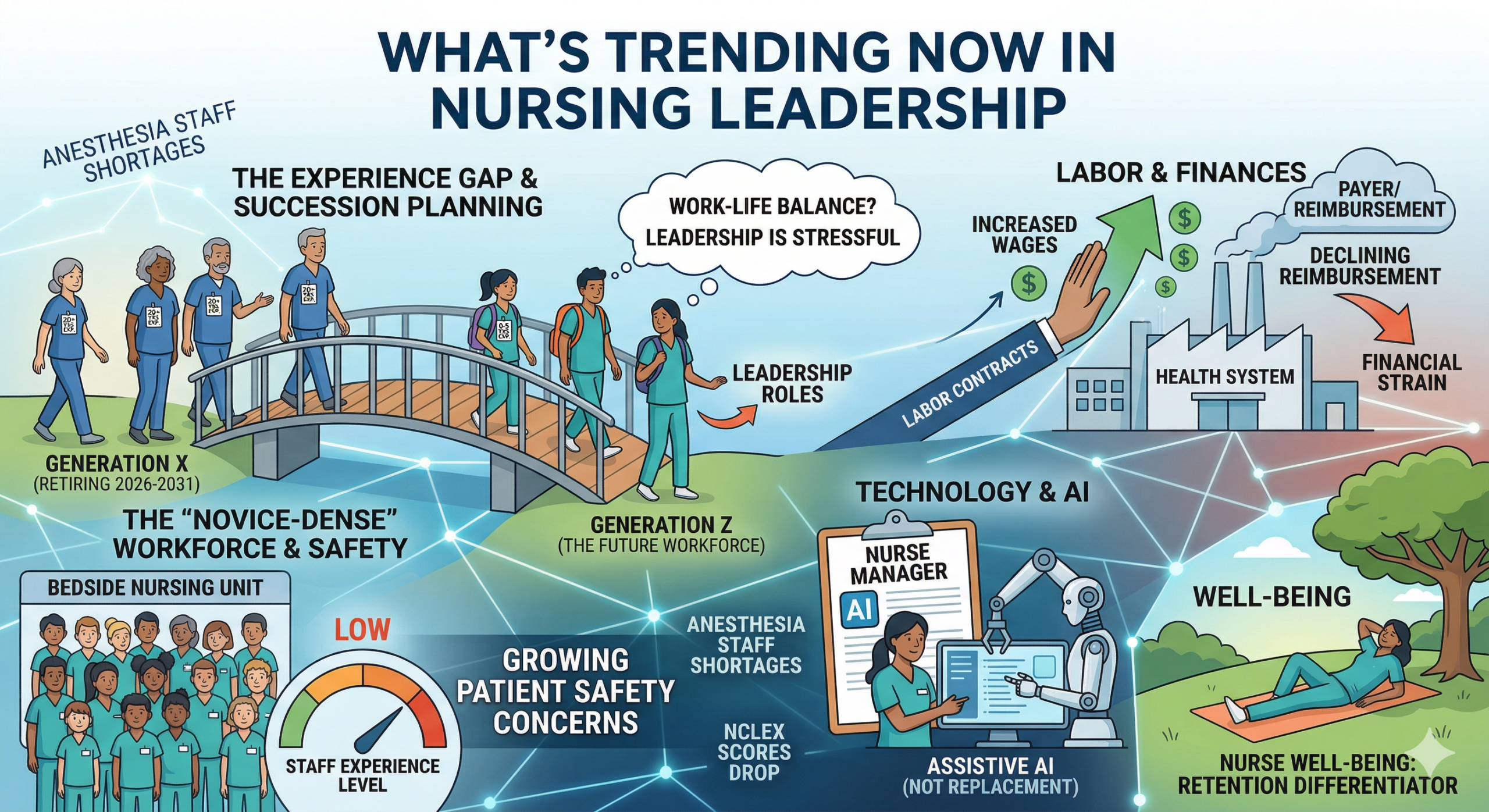
The first quarter of 2026 is over, yet the healthcare environment remains turbulent, with some strong headwinds ahead as health systems continue to evaluate the potential financial impact of HR-1. Here is what I see trending now as I meet with nurse leaders across the country.
Union activity continues to increase across the country. Nurse leaders are carefully monitoring developments in New York City regarding the recent nursing strikes. Even moderate wage increases could place enormous strain on health systems’ budgets as they face potentially lower reimbursement. The recent New York City strikes involving nearly 15,000 nurses have redefined what “union activity” looks like. It is no longer just about wages. Contract discussions now include “AI Guardrails.” Nurses are pushing for language that ensures AI is an assistive layer for documentation and triage, not a replacement for clinical judgment. CNOs are reporting that the “strike-to-settlement” period is exceptionally damaging to the psychological safety of frontline managers. These managers often feel caught in a “loyalty sandwich” between executive fiscal mandates and the very real staffing pleas of their teams.
Nursing turnover has decreased, but not among Generation Z nurses. While overall turnover is stabilizing, the Gen Z cohort (those born 1997–2012) remains a flight risk. Recent data from Press Ganey shows Gen Z nursing turnover hovering near 24%, the highest among generations. By the end of the second year of employment, more than 50% have left their organizations. Unlike Millennials, who often sought rapid career ladders, Gen Z is prioritizing their well-being and scheduling flexibility. If a health system cannot offer creative scheduling options (such as self-scheduling apps or hybrid roles that include virtual nursing), this cohort is simply walking away from acute care.
Patient safety is a growing concern with a novice-dense nursing workforce. Acute care environments are admitting older and more acutely ill patients who present higher risks. The volumes and turnover of patients are like nothing we have ever experienced in healthcare. At the same time, the care complexity-staff experience gap continues to widen as more novices join the acute care workforce each year. In many units, 70% to 80% of the staff are now “novice” or “advanced beginner” nurses with less than two years of experience. These are dangerously high numbers from a quality-risk perspective. When most of your frontline staff are still learning to “read the room” clinically, the safety net that used to exist—that intuitive “sixth sense” of an experienced nurse—is stretched incredibly thin.
Nursing leadership succession planning is increasingly important. Nurse leaders are now concerned about strengthening their leadership bench. As Gen X leaders (who currently hold the majority of Director and C-Suite roles) begin their five-year countdown to retirement, Gen Z’s lack of interest is creating a vacuum. More leadership selections now happen from within organizations rather than external hires. While this trend is great for internal career mobility, nurse leaders report that Generation Z nurses are not stepping into leadership roles (even at the charge nurse level) at the same rate as their Millennial colleagues. Their primary focus is on work-life balance. This is consistent with recent findings from a Deloitte study that indicated only 6% of Generation Z are interested in senior leadership roles. We need to “rebrand” leadership as a role that supports—rather than sacrifices—work-life harmony.
Nursing school enrollments continue to rise, but NCLEX scores have dropped, and securing good clinical experiences is more difficult. NCLEX 2025 pass rates fell to 69.1%. This is the first decline since the Next Generation NCLEX launched in 2023, and some states are experiencing more issues than others. With NCLEX pass rates fluctuating and clinical placement spots becoming a bottleneck, the “Transition to Practice” phase is more fragile than ever. Savvy leaders are now working with their academic practice partners to improve clinical experiences and are moving away from traditional orientation toward “Competency-Based Transition Models.”
The supply of nurse practitioners exceeds the demand in many geographic locations. For years, nurses have been told that advanced practice was the “escape hatch” from the bedside. While rural areas are still desperate for NPs, urban hubs (like Boston, NYC, and Nashville) are seeing an oversupply. This is putting downward pressure on NP starting salaries in those areas, potentially driving some NPs back into specialized acute care roles or leadership. This may be a short-term issue with the impending physician shortages, but nurse leaders are now doing more career coaching with new graduates to make them aware of what is happening.
Shortages of anesthesia staff are raising concerns about health systems’ ability to sustain surgical and procedural volumes. The anesthesia shortage has moved from a “provider pain point” to a “systemic revenue threat” in 2026. Because surgical and procedural services often generate the majority of a hospital’s margin, this is a top-of-mind issue for every CNO and CFO. The shortage of anesthesia providers—both anesthesiologists and CRNAs—has reached a “tipping point” in 2026, fundamentally altering how health systems approach surgical growth. Surgical services typically account for over 60% of hospital revenue. When ORs sit dark due to a lack of anesthesia coverage, the financial impact is immediate. There is an increase in the use of high-cost locum tenens to bridge these gaps, further eroding thin operating margins. Many systems are moving toward an all-CRNA model for low-acuity cases or ASCs, while reserving anesthesiologists for high-acuity, complex cases.
© emergingrnleader.com 2026
To effectively lead through these challenges and others, nurse leaders need new tools and strategies. Let me help you as I have helped hundreds of organizations over the past five years. Book a workshop or keynote for your team by contacting me at roseosherman@outlook.com
Brand New For 2026 and Already Receiving Rave Reviews – Staying Power Building a Culture of Retention in the New World of Work
Brand New for 2026 and Already Popular – The Inverted Pyramid: Leading Teams of Novice Nurses The Inverted Pyramid WS Information Sheet
Our Most Popular Right Now –The New World of Work Workshop
A Leader Favorite – Building Bridges Not Walls: Leading Multigenerational Work Teams – Click Here for More Information Building Bridges Not Walls
A Must-Read Book in 2026 – Click Here to Buy



 LinkedIn
 Instagram