By Rose O. Sherman, EdD, RN, NEA-BC, FAAN
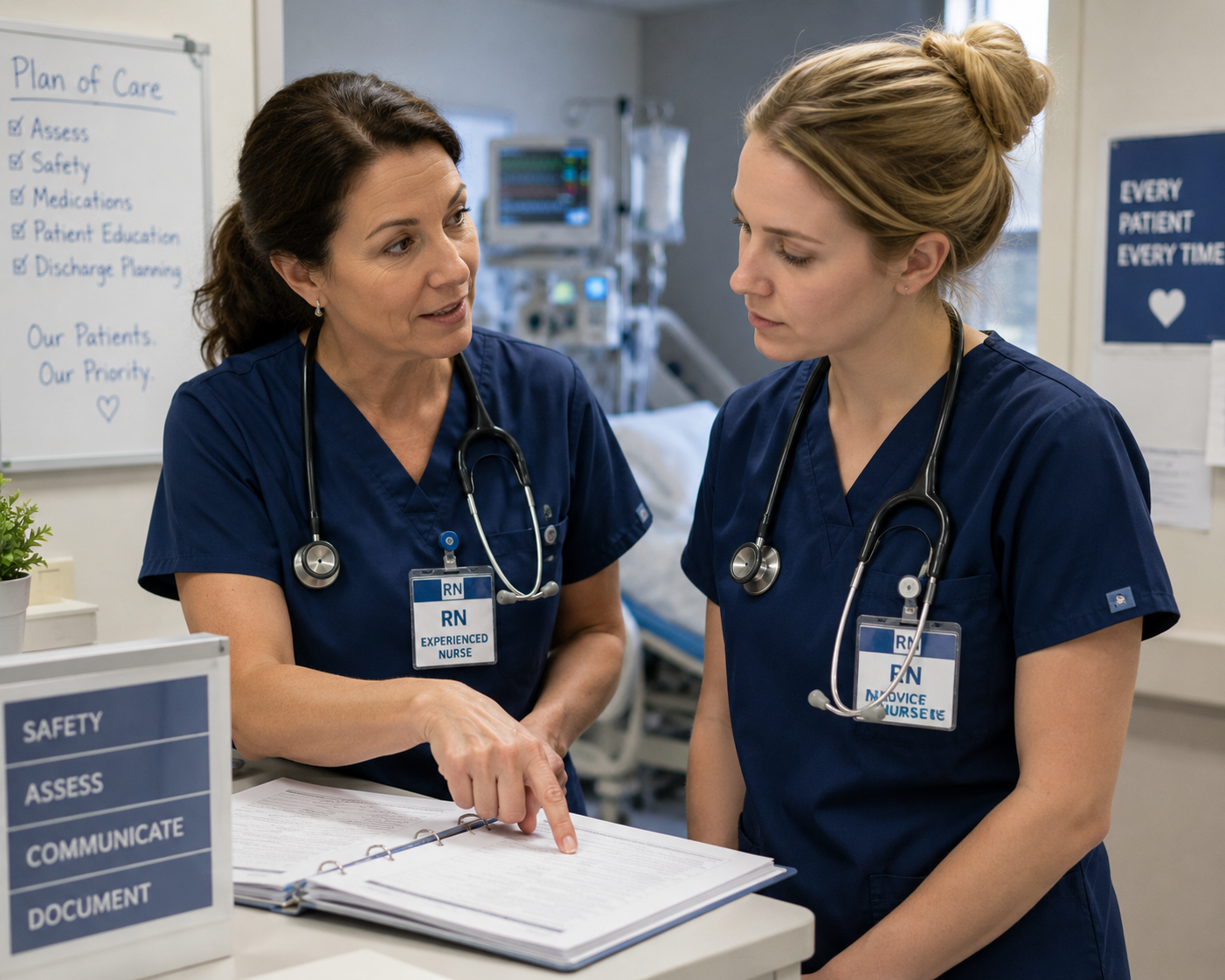
Every nurse manager recognizes the difference between having textbook knowledge and clinical mastery. It’s the ability to look at a patient from the doorway and know they are deteriorating before the vitals even change. It’s knowing exactly how to maneuver a difficult specialty catheter, or how to de-escalate a family’s mounting anxiety with just the right phrasing.
This is tacit knowledge. Unlike explicit knowledge—which can be codified in electronic health record (EHR) prompts, clinical guidelines, and standard operating procedures—tacit knowledge is personal, context-specific, and hard to formalize. It is forged through years of trial, error, and repetition at the bedside. Right now, acute care units across the country are facing an unprecedented loss of this foundational wisdom. As veteran nurses retire or transition away from direct patient care, the structural scaffolding of clinical teams is shifting. We are increasingly seeing novice dense units where the collective clinical “age” or experience level has dropped significantly. When that experience leaves, it takes with it the invisible safety net of years of clinical surveillance that keep patients safe.
When a unit loses its experienced nurses, who are the tacit knowledge holders, the ripples are felt immediately:
-
The “Failure to Rescue” Risk: Novice nurses have the explicit knowledge (they know what the alarms mean), but they often lack the tacit pattern recognition to synthesize subtle clinical changes into an urgent intervention.
-
Decreased Unit Efficiency: Without seasoned peers to offer quick, intuitive course corrections, tasks take longer, questions multiply, and workflows stall.
-
Increased Burnout for New Graduates: Seeking answers from a unit full of inexperienced peers creates immense psychological stress for new nurses, accelerating early-career turnover.
We cannot stop the demographic shift we now see, but nurse leaders can plan strategies to capture, share, and protect this fragile clinical wisdom before it walks out the door.
1. Reimagine the Preceptor and Mentor Architecture
Traditional orientation formats often fail to transfer tacit knowledge because they focus heavily on checking off explicit skills.
-
Co-Design “Thinking Aloud” Protocols: Encourage preceptors to narrate their clinical reasoning in real time. Instead of just hanging an IV medication, the preceptor should explain the why behind their sequencing, environmental awareness, or patient interaction.
-
Create Structured “Micro-Mentorships”: Pair late-career or veteran nurses with newer staff for targeted, low-stakes interactions. This can include 10-minute debriefs after complex admissions or challenging family updates to unpack the “nuance” of the situation.
2. Implement “Knowledge Harvesting” Debriefs
Tacit knowledge is often brought to light only when something unusual occurs. Leaders should build regular reflection into the unit culture.
-
Shift Post-Mortems: Move beyond traditional shift handoffs. When a complex clinical situation is successfully managed, spend five minutes during huddle or a staff meeting dissecting how it was done. Ask the veteran nurses: “What did you notice first that made you check that lab value?”
-
Storytelling as a Business Asset: Encourage senior nurses to share “case stories” rather than just data points. Human brains are wired to retain narratives, making stories an excellent vehicle for transferring intuitive clinical wisdom.
3. Leverage Flexible Roles to Retain Expert Wisdom
Losing a full-time veteran nurse to retirement doesn’t have to mean losing 100% of their knowledge.
-
The Nurse Emeritus Role: Create part-time, non-traditional roles for late-career nurses focused purely on clinical consultation, real-time triage support, or mentoring on the floor during peak admission hours—without the physical burden of a full patient assignment.
-
Virtual Expert Support: Explore standardizing a model where experienced, remote nurses are accessible via virtual technology to help novice bedside nurses validate clinical decisions, read complex rhythms, or double-check high-risk medications.
4. Foster Psychological Safety to Accelerate Learning
In an environment with a steep learning curve, novice nurses must feel safe admitting what they don’t know. Normalize vulnerability from the top down. When leaders open the door for team members to say, “I’ve read the policy, but I’ve never actually managed this nuance before,” it creates the perfect opening for tacit knowledge transfer to happen organically.
We can no longer assume that clinical wisdom will naturally diffuse across a unit through proximity alone. In the modern acute care landscape, the deliberate capture and transfer of tacit knowledge is no longer just a professional development goal—it is a critical patient safety strategy.
© emergingrnleader.com 2026
To effectively lead through these challenges and others, nurse leaders need new tools and strategies. Let me help you as I have helped hundreds of organizations over the past five years. Please contact me at roseosherman@outlook.com to book a workshop or keynote for your team. Not seeing what you want on this list? Feel free to reach out, and I am happy to design a custom program to meet your needs.
Brand New For 2026 and Already Receiving Rave Reviews – Staying Power Building a Culture of Retention in the New World of Work
Brand New for 2026 and Already Popular – The Inverted Pyramid: Leading Teams of Novice Nurses The Inverted Pyramid WS Information Sheet
Our Most Popular Right Now –The New World of Work Workshop
A Leader Favorite – Building Bridges Not Walls: Leading Multigenerational Work Teams – Click Here for More Information Building Bridges Not Walls
A Must-Read Book in 2026 – Click Here to Buy



 LinkedIn
 Instagram