By Rose O. Sherman, EdD, RN, NEA-BC, FAAN
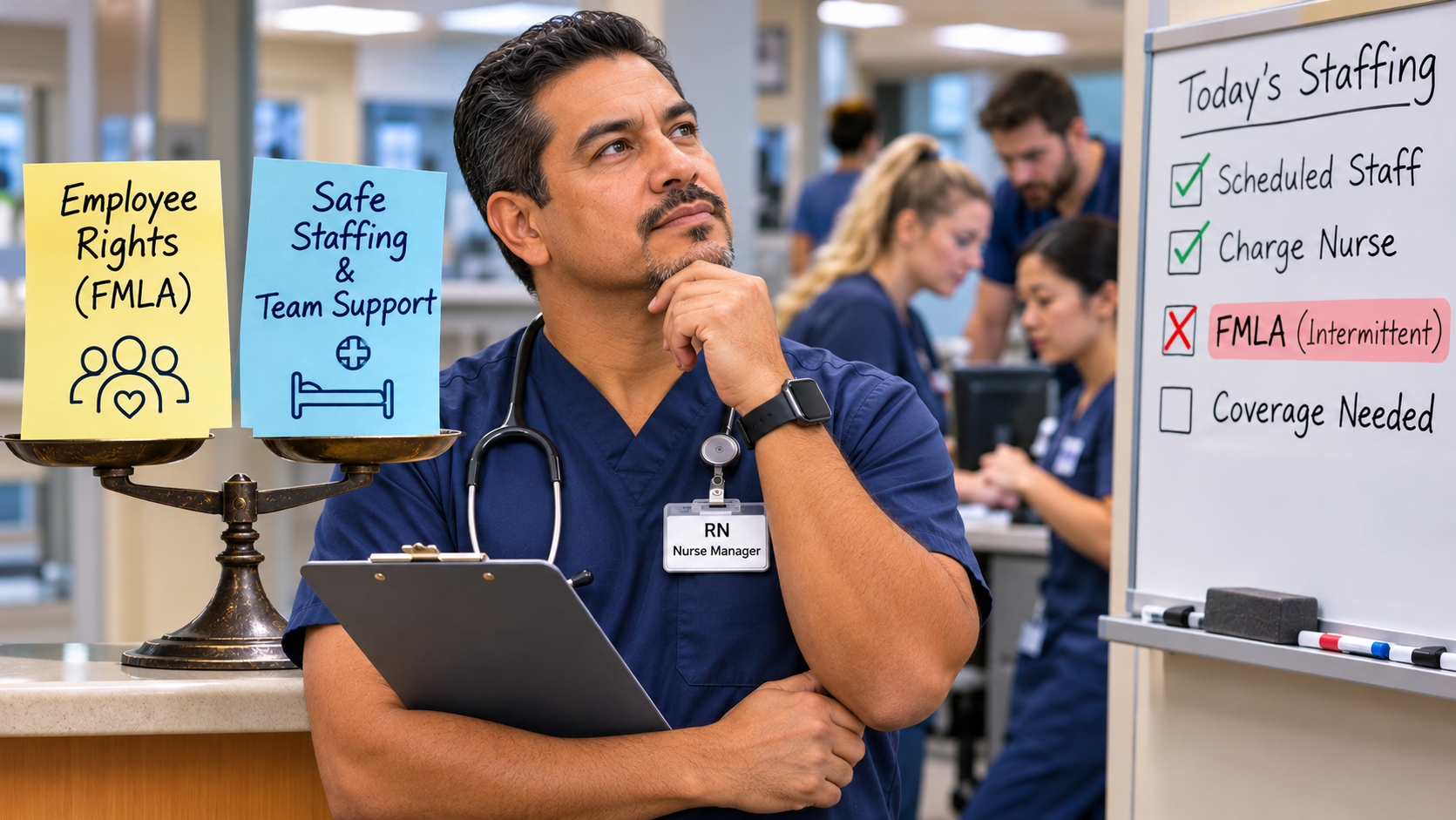
Nurse managers are telling me about a staffing challenge that is difficult to discuss openly: managing intermittent leave under the Family and Medical Leave Act (FMLA). The concern is not that nurses should be denied legally protected leave. FMLA provides essential protections for employees dealing with serious health conditions and family caregiving responsibilities. Nurses need these protections just as much as other workers, perhaps even more given the demanding nature of their work. The challenge is that FMLA use appears to be growing, and intermittent absences are becoming harder to predict in an already fragile staffing environment.
Consider a nurse manager who begins the day with what appears to be an adequate staffing plan. Thirty minutes before the shift begins, an experienced nurse calls out using approved intermittent FMLA leave. The manager scrambles to find coverage, but the float pool is exhausted, and no one wants another overtime shift. The remaining nurses are frustrated. Several are relatively new graduates who depended on the absent nurse for clinical guidance. The charge nurse now has additional patients and fewer experienced colleagues to help with complex situations. The manager understands the employee’s right to protected leave. But she is also responsible for patient safety, staffing, and the team’s well-being.
Why Intermittent FMLA Use is Particularly Challenging in Nursing
Unlike many workplaces, hospitals operate around the clock. Nursing schedules must account for patient acuity, required competencies, staff experience, and available clinical resources. Intermittent FMLA leave can create special challenges because employees may need time away from work in separate blocks rather than one continuous absence. Some leave is predictable, such as scheduled treatments. Other absences may be medically necessary but difficult to anticipate.
The operational consequences can include:
- Last-minute staffing shortages and costly replacement coverage.
- Increased overtime and additional pressure on available nurses.
- Greater workload for charge nurses and nurse managers.
- Disruption of continuity of care and team assignments.
- Fewer experienced nurses available to coach novice staff.
- Frustration among employees who repeatedly cover unexpected absences.
These consequences are real, but they do not mean the employee taking protected leave is responsible for the organization’s staffing problems.
The Fairness Dilemma
One of the most difficult aspects of intermittent FMLA is the perception of fairness. Nurses who regularly work their scheduled shifts may become frustrated when they are repeatedly asked to cover absences, stay late, or take additional assignments. They may begin asking their managers why certain employees seem to be absent more frequently or whether the organization is doing enough to address the situation. These conversations place nurse managers in a difficult position. Managers cannot disclose another employee’s private medical information or treat legally protected leave as misconduct. At the same time, they cannot ignore the fatigue and frustration of the staff who remain. The solution is not to pit one group of nurses against another.
The Hidden Risk
Intermittent absences create an additional challenge in today’s nursing workforce that deserves more attention. Many acute care units have become novice-dense, with a significant proportion of nurses having less than two years of experience. In these environments, experienced nurses provide much more than direct patient care. They serve as informal coaches, recognize subtle signs of deterioration, anticipate problems, and help less experienced colleagues navigate unfamiliar situations. When an experienced nurse is unexpectedly absent, the unit may lose an important clinical safety net. A replacement nurse may fill the numerical staffing gap without replacing the experience, judgment, and informal leadership that the absent nurse would have contributed. This is why staffing decisions must increasingly consider not just the number of nurses available, but also the team’s experience and capabilities.
Facing the Reality
Nurses have a legal right to use FMLA, and they increasingly do. Perhaps we are asking the wrong question when we focus only on how nurse managers should handle intermittent FMLA absences. The more important question may be whether our staffing systems are sufficiently resilient to accommodate the realities of today’s workforce. Employees will experience illnesses, caregiving responsibilities, and other circumstances that require legally protected leave. Those needs will not disappear. Nurse leaders cannot solve this challenge by asking staff to work harder, accept more overtime, or be more flexible. Healthcare organizations need to recognize that unpredictable absences are part of workforce planning. Staffing models, resource pools, scheduling practices, and clinical support systems must reflect that reality.
Rather than assuming every scheduled nurse will be available, organizations should use historical absence patterns and staffing data to evaluate the need for contingency coverage. Planning should focus on aggregate staffing requirements, not assumptions about individual employees’ medical conditions. FMLA protects employees when life becomes unpredictable. Our staffing systems need to be resilient enough to protect patients and coworkers when it does. That is the leadership challenge worth discussing.
Book Now – Brand New Full-Day Workshop for Your 2027 Leadership Needs – Rethinking Leadership and Redesigning Work
© emergingrnleader.com 2026
To lead through these challenges and others effectively, nurse leaders need new tools and strategies. Let me help; I have supported hundreds of organizations over the past six years. Please contact me at roseosherman@outlook.com to book a workshop or keynote for your team. Not seeing what you want on this list? Feel free to reach out, and I am happy to design a custom program to meet your needs.
Staying Power: Building a Culture of Retention in the New World of Work
Brand New in 2026 with Rave Reviews – The Inverted Pyramid: Leading Teams of Novice Nurses The Inverted Pyramid WS Information Sheet
Our Most Popular Right Now –The New World of Work Workshop
A Leader Favorite – Building Bridges Not Walls: Leading Multigenerational Work Teams – Click Here for More Information Building Bridges Not Walls
A Must-Read Book in 2026 – Click Here to Buy



 LinkedIn
 Instagram
