By Rose O. Sherman, EdD, RN, NEA-BC, FAAN
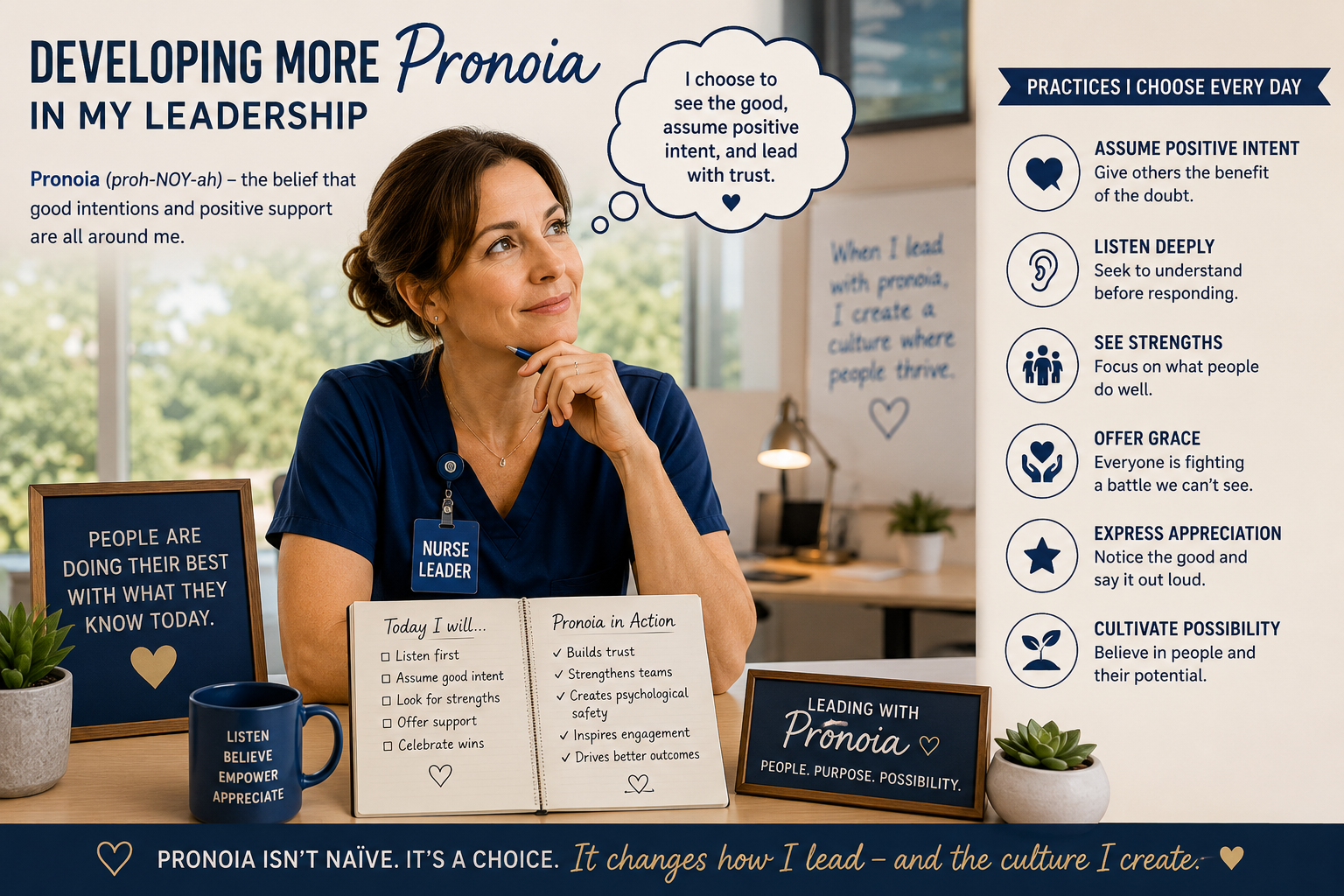
I recently spoke with a nurse leader colleague who told me she was having trouble staying optimistic. She noted, I almost feel a little paranoid and am definitely under extreme budget pressure from every direction. The nursing staff is not happy, and it is easy to see why. Volumes are up, and workload is through the roof, but reimbursement is down. Optimism seems to be in short supply. I am doing the best I can to see the glass as half full, but it is not easy. I honestly feel like our systems leadership is setting us up to fail. Every time we catch our breath, another mandate drops. It feels like everyone and everything is working against us.”
Her reaction was understandable. When you spend 12-hour shifts navigating operational fires, defending your unit against constant change can feel like basic self-preservation. But this defensive posture comes with a quiet cost: it trains our brains to anticipate friction, view feedback with suspicion, and interpret every systemic disruption as a personal ambush.
Defining Pronoia
In psychology, this hypervigilance is often seen as similar to paranoia. But an opposite, deeply empowering cognitive state is what nurse leaders need right now: Pronoia. Pronoia is the belief that the universe, the people around you, and even challenging circumstances are secretly conspiring to help you succeed if you look for the evidence. While some might call this naive optimism or toxic positivity, pronoia is neither. It is a deliberate cognitive discipline. Pronoia does not ignore staffing deficits or operational strain; rather, it fundamentally changes how a leader interprets those realities. Where a paranoid mindset asks, “Why is this happening to me?”, a pronoic mindset asks, “What is this situation preparing me and my team to do?”
A Shift in Mental Model
When we view the healthcare environment as inherently hostile, our leadership posture becomes reactive, rigid, and guarded. Practicing pronoia lets us step back and uncover the hidden scaffolding behind our biggest headaches. When a leader receives a new policy and views it through a paranoid lens, they may see it as making the workflow harder. Viewed through the pronomic lens, you might instead ask yourself: what does this change in workflow make possible, and what obsolete practices can we retire?
Steps to Build Pronoic Leadership
Practicing pronoia in your leadership takes intentionality. Here are four steps that you can take:
1. Assume Positive Intent
When a physician questions a call that they received in the middle of the night or a new nurse questions an assignment, our first instinct as leaders is often defensive. Pronoic leaders pause and assume human behavior is shaped by unmet needs rather than malicious intent. Asking, “What pressure are they under that I cannot see?” immediately defuses tension and creates room for collaborative problem-solving.
2. Become More Reflective in Your Leadership
Think back five or ten years. The most grueling crisis you managed—a sudden leadership vacuum, an accreditation inspection, a budget cut—almost certainly forged the skills, resilience, and confidence you rely on today. When a new disruption hits, pull that retrospective wisdom into the present moment: “How will this challenge make us a stronger, more adaptive unit by next year?”
3. Look for Supportive Allies in Challenging Situations
Instead of isolating yourself when leading a difficult change, look for supportive allies with expertise who can help you. Ask more questions. Treat feedback as an invitation to co-design solutions, not a barrier to compliance. If you open yourself up, good solutions will flow. You are not alone, but if you self-isolate, it can feel this way.
4. Allow Venting When Accompanied by Constructive Solutions
Cynicism is socially contagious, especially during shift report and administrative meetings. While acknowledging genuine pain points is critical, continuous venting without action depletes energy and can lead to team toxicity. Establish a simple team norm: for every systemic bottleneck brought to the table, identify two operational wins, strong peer interventions, or steady points of progress from the week.
Seeing the glass as half full does not mean pretending the water is not spilling. It means trusting that you have the tools, the team, and the inner resilience to build a better container. The next time an unexpected crisis lands on your desk, pause before reacting. Take a slow breath, silence the defensive voice, and ask yourself the pronoic question: If this disruption arrived specifically to elevate our team’s capability, what is our next best move?
© emergingrnleader.com 2026
To effectively lead through these challenges and others, nurse leaders need new tools and strategies. Let me help you as I have helped hundreds of organizations over the past five years. Please contact me at roseosherman@outlook.com to book a workshop or keynote for your team. Not seeing what you want on this list? Feel free to reach out, and I am happy to design a custom program to meet your needs.
Brand New For 2026 and Already Receiving Rave Reviews – Staying Power Building a Culture of Retention in the New World of Work
Brand New for 2026 and Already Popular – The Inverted Pyramid: Leading Teams of Novice Nurses The Inverted Pyramid WS Information Sheet
Our Most Popular Right Now –The New World of Work Workshop
A Leader Favorite – Building Bridges Not Walls: Leading Multigenerational Work Teams – Click Here for More Information Building Bridges Not Walls
A Must-Read Book in 2026 – Click Here to Buy



 LinkedIn
 Instagram