By Rose O. Sherman, EdD, RN, NEA-BC, FAAN
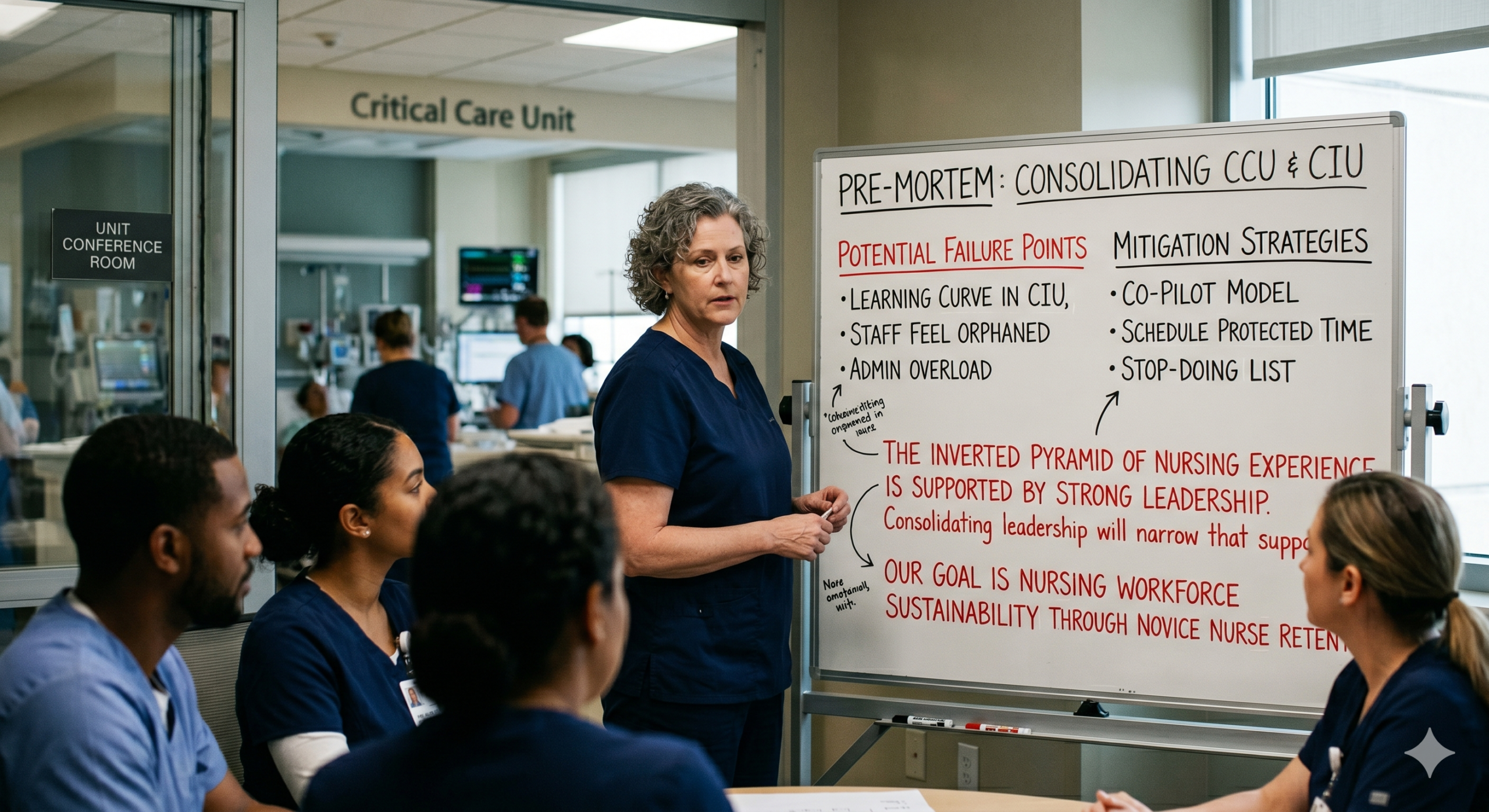
Recently, a nurse manager reached out to me for advice on a situation she is now confronting in her organization. She is a nurse manager who leads a busy cardiac care unit and has been asked by her CNO to pick up a second department – the Cardiac Interventional Procedural Unit. This would be a new area for her and would add substantial responsibilities to her already quite full plate. The motivation is that the health system has economic challenges and wants to keep as many nursing positions in direct care as possible by reducing leadership roles.
This leader’s predicament is growing more common today. In the current healthcare climate, “doing more with less” has moved from a temporary challenge to a permanent strategy. For a nurse manager leading a high-stakes Critical Care Unit (CCU) and being asked to take on a second department, such as the Cardiac Interventional Unit (CIU), is both a compliment to her competence and a significant risk to her professional well-being. She is aware of the data on the span of accountability and understands the risks, which is why she reached out.
I recommended to her that, before she said yes or no, she should conduct a pre-mortem. Unlike a post-mortem, which analyzes why a project failed after the fact, a pre-mortem is a form of “prospective hindsight.” You imagine a future where this new arrangement has failed spectacularly, and then you work backward to determine what caused that failure. By identifying the “ghosts of the future” now, you can make a more informed decision and, if necessary, build the infrastructure to prevent failure.
This leader could begin with this exercise. Imagine it is one year from today. You have resigned, the CCU’s engagement scores have plummeted, and the CIU has high turnover. What happened?
During a pre-mortem, we look for the “cracks in the foundation.” We are anticipating in advance what the failure points could be here. For this leader, the likely culprits would be:
-
The “Shadow” Learning Curve: While a CCU manager understands high-acuity care, the CIU has different workflows, specialized equipment, and distinct physician dynamics. The failure point: Underestimating the time needed to gain clinical credibility in the new unit.
-
The “Vicious Cycle” of Visibility: Being in two places at once is impossible. The failure point: Staff in both units feel “orphaned,” leading to a breakdown in trust and a rise in “us vs. them” mentalities. The nurse manager will feel she is failing the staff in both areas because she cannot maintain the required number of touchpoints.
-
The Administrative Avalanche: Doubling the departments means doubling the budget reviews, staffing committees, and HR issues. The failure point: The leader becomes a “desk manager,” losing the ability to provide the “on-the-floor” support Gen Z nurses prioritize.
Once this manager identifies how the ship might sink, she can begin to plug the holes before she leaves the dock.
| Failure Risk | Mitigation Strategy |
| Loss of Visibility | Establish a “Co-Pilot” model. Empower a lead RN or Assistant Manager in each unit to handle daily huddles and immediate operational needs. |
| Clinical Disconnect | Schedule “protected learning time” in the CIU for the first 90 days. Be a student of their workflow before trying to manage it. |
| Burnout/Task Overload | Negotiate a “Stop-Doing” list. If you take on the CIU, what administrative tasks (non-essential meetings, legacy reports) can the CNO take off your plate? |
One risk factor that the nurse manager needs to fully discuss with her CNO is the composition of her current and future workforce. If either clinical unit is novice-dense (has an Inverted Pyramid), that changes the manager’s roles. Consolidating leadership roles further narrows that point of support. If you are going to lead two units, your primary job isn’t just “managing”—it’s building a culture of retention. You must ensure that even with your time split, the support for those novice nurses remains 100% intact.
The CNO’s request is driven by economic necessity, but the nurse manager’s success is driven by boundaries and foresight. Conducting a pre-mortem isn’t being a pessimist; it’s being a strategist. If she picks up a second department, she can tell the executive team: “I can make this work, but here are the three things that will cause this to fail—and here is what I need from you to ensure they don’t happen.”
emergingrnleader.com 2026
To effectively lead through these challenges and others, nurse leaders need new tools and strategies. Let me help you as I have helped hundreds of organizations over the past five years. Book a workshop or keynote for your team by contacting me at roseosherman@outlook.com
Brand New For 2026 and Already Receiving Rave Reviews – Staying Power Building a Culture of Retention in the New World of Work
Brand New for 2026 and Already Popular – The Inverted Pyramid: Leading Teams of Novice Nurses The Inverted Pyramid WS Information Sheet
Our Most Popular Right Now –The New World of Work Workshop
A Leader Favorite – Building Bridges Not Walls: Leading Multigenerational Work Teams – Click Here for More Information Building Bridges Not Walls
A Must-Read Book in 2026 – Click Here to Buy



 LinkedIn
 Instagram