By Rose O. Sherman, EdD, RN, NEA-BC, FAAN
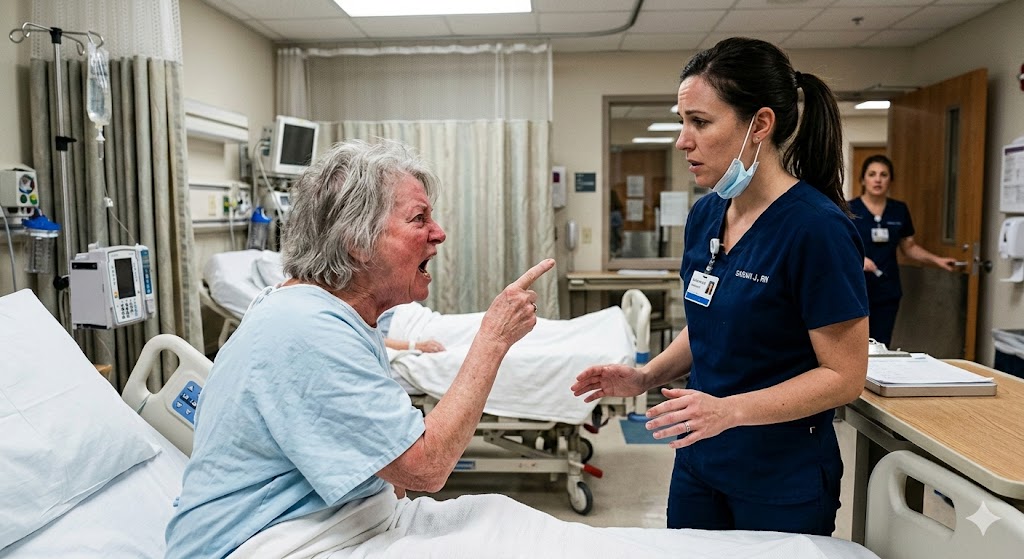
In almost every session I do, nurse leaders talk about the escalation of violent behavior from patients and family members. Almost everyone agrees it is out of control, but solving the problem is complex. Many health systems have clear behavioral guidelines and a zero tolerance for incivility and violence. But enforcing these rules is more nuanced, given EMTALA’s requirement that patients be at least evaluated in ERs, and the health system’s reliance on good patient experience scores as an outcome measure for reimbursement.
It is interesting that so many nurse leaders share with me that they think staff responses often make these situations worse. Acute care environments are now heavily dominated by novice nurses who lack strong communication skills and also the situational awareness to recognize or respond to behavioral escalation. Some health systems that have implemented virtual nursing now see an unexpected outcome: earlier intervention and prevention of violent behavior, as seasoned virtual nurses observe behaviors that novices may miss.
I have always believed (based on 25 years in the Department of Veterans with so many out-of-control patients and families) that nursing is an important part of the puzzle in reducing violent behavior. Like most of my VA colleagues, I took the Violence Prevention Intervention training yearly as part of our annual reviews. It was not an online course but rather in-person, using actors playing the role of angry veterans. Our training included learning de-escalation response techniques, how to position yourself when confronting angry patients to avoid assaults, and even safe patient takedowns. It was considered as important as BLS and ACLS training. Virtually all of us understood how important this training was because we had been in many situations where we needed to use it.
This week in Becker’s Hospital Review, there was an article about a highly successful nurse-led intervention at WakeMed in North Carolina that has cut their violent incidences to ZERO. It was three step process:
First, they implemented a tool to identify patients at high risk for outbursts. This allowed staff to react and respond appropriately.
Second, psychiatric nurses began rounding with med-surg nurses, making them a regular part of the team.
Third, they created a new role: the mental health response nurse. These are expert nurses with extensive experience in mental health across settings. Their job is to respond to any code called on campus involving a behavioral patient. There are two types of calls, similar to medical calls, like rapid response and code blue. Therapeutic intervention calls are for when something does not seem right, and behavioral emergency response calls are for when an emergent event is happening. The mental health response nurse responds to all calls and acts as the expert at the bedside.
The WakeMed program is built on customer service principles, recognizing that in these situations, there are at least two customers – the patient/family members and the staff. When the responders walk in and say, ‘I’m here to help,’ they are assisting both customers in the interaction. Support took on a number of forms, including having psychiatric nurses administer and manage behavioral medications so patients do not associate it with the primary care nurse. This helps preserve relationships. The program has boosted nurses’ confidence in de-escalation by 30%, and their comfort with agitation management orders by 70%. WakeMed’s program uses very similar approaches to those used by VHA when I was in leadership. There is clear recognition that behavioral health management, especially in acute care areas, requires specialty training that most RNs lack and need support with.
Just as we understood in the VA that the mental health issues we saw in our veterans were not going to disappear, we need to now have that same realization in other settings. Between insurance denials and access issues, these problems are likely to escalate. As a society today, we have less patience, far less emotional intelligence, and a population with lower baseline mental health. Setting behavioral expectations for patients and families is not enough – we need to better equip our nurses to deal with the fallout of a societal issue they did not cause, but must learn to professionally respond to. WakeMed’s response appears to be a best practice that other health systems could learn from.
© emergingrnleader.com 2026
To effectively lead through these challenges and others, nurse leaders need new tools and strategies. Let me help you as I have helped hundreds of organizations over the past five years. Book a workshop or keynote for your team by contacting me at roseosherman@outlook.com
Brand New For 2026 and Already Receiving Rave Reviews – Staying Power Building a Culture of Retention in the New World of Work
Brand New for 2026 and Already Popular – The Inverted Pyramid: Leading Teams of Novice Nurses The Inverted Pyramid WS Information Sheet
Our Most Popular Right Now –The New World of Work Workshop
A Leader Favorite – Building Bridges Not Walls: Leading Multigenerational Work Teams – Click Here for More Information Building Bridges Not Walls
A Must-Read Book in 2026 – Click Here to Buy



 LinkedIn
 Instagram